
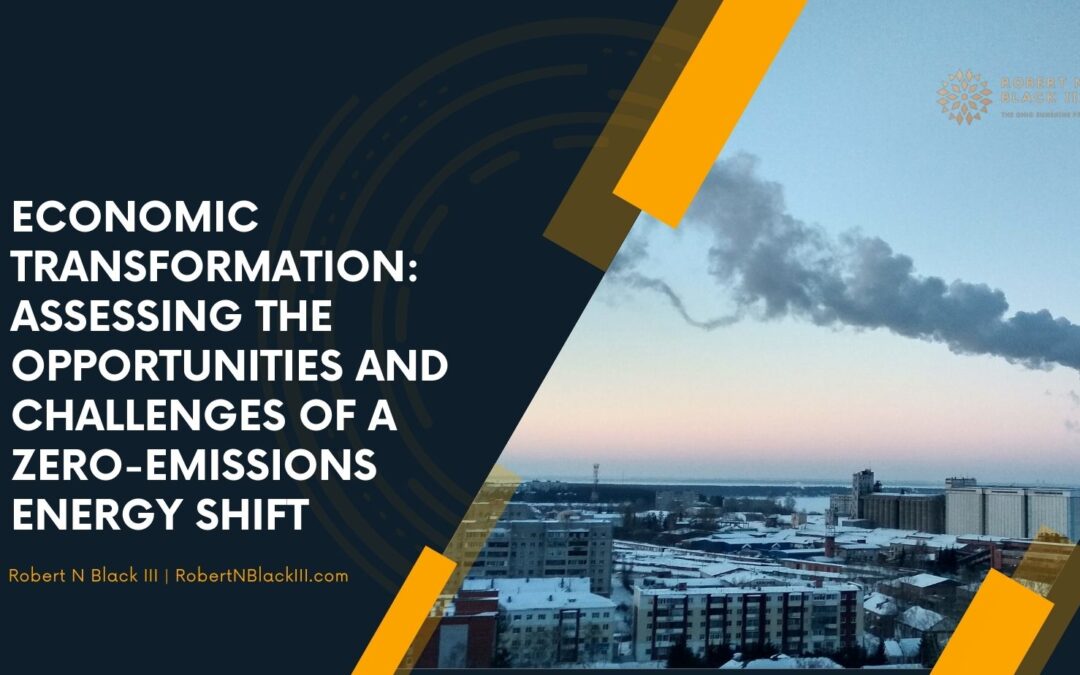
The transition to a zero-emissions energy system holds the promise of addressing the urgent issue of climate change and triggering significant economic transformation. This shift from fossil fuels to clean and renewable energy sources presents opportunities and challenges that reshape economies, industries, and job markets globally. As countries strive to balance environmental sustainability and economic growth, assessing the potential benefits and obstacles associated with this profound transformation is essential.
Opportunities:
Job Creation: The shift towards zero-emissions energy sources, such as solar, wind, and electric vehicles, creates a demand for new jobs in manufacturing, installation, maintenance, and research. The renewable energy sector, for example, has the potential to provide a substantial number of jobs, ranging from engineering to skilled trades.
Innovation and Research: The need for new technologies, improved energy storage solutions, and efficient grid management drives innovation and research. Investment in clean energy research advances technology and fosters a culture of innovation that can spill over into other industries.
Improved Public Health: Reducing air pollution associated with fossil fuel combustion improves air quality and public health outcomes. Fewer cases of respiratory illnesses and healthcare costs contribute to overall economic well-being.
New Business Opportunities: The clean energy sector’s growth opens up opportunities for entrepreneurship and the development of new business models, ranging from energy efficiency solutions to innovative financing mechanisms.
Export Opportunities: Countries that excel in clean energy technologies can become global leaders in exporting these technologies, fostering economic growth and international partnerships.
Challenges
Transition Costs: The initial investment required to build renewable energy infrastructure, upgrade grids, and retrain the workforce can be substantial. Transitioning away from existing fossil fuel infrastructure might result in short-term economic challenges.
Workforce Transition: As traditional fossil fuel industries decline, a just transition for workers in those sectors becomes essential. Retraining and providing new employment opportunities for affected workers can be logistically and financially complex.
Economic Disruptions: The transition might lead to economic disruptions in regions heavily dependent on fossil fuel extraction, potentially causing economic inequalities and social unrest.
Technical and Infrastructural Challenges: Integrating variable renewable energy sources into existing grids and ensuring their stability poses technical challenges. Energy storage technologies and grid modernization are required to manage intermittent energy generation.
Global Competitiveness: Countries need to ensure that their transition efforts don’t result in losing competitiveness on the global stage. Balancing economic growth with emission reduction targets can be complex.
Policy Uncertainty: Uncertain policy frameworks and inconsistent regulations can deter investments in clean energy. Stable and long-term policies are crucial to drive economic transformation.
The economic transformation associated with a zero-emissions energy shift is a complex endeavor with many opportunities and challenges. As nations strive to align their economic interests with environmental sustainability, careful planning and collaboration are essential. Policymakers, industries, and communities must work together to capitalize on the economic benefits, address the challenges, and ensure a just and equitable transition.